Click on the banner to visit Jason A. Kilgore's Amazon author page
Showing posts with label publishing. Show all posts

Tuesday, March 5, 2024

How To Get A Book Cover As An Indie Author

You’ve written a book. Congratulations! But as a self-published author, you now need to get a cover image. What do you do? Read on….


Photo by Mediamodifier on Unsplash

Publishing houses hire their own artists to make cover images, and have graphic artists format those images into book covers with text. They also have a marketing department to help decide what sort of cover art is selling the best, collect “voice of customer” feedback to choose from several designs, and can afford expensive graphics software and fonts to do the design work. It can cost them thousands of dollars to do all of this, but the end result is professional and appealing.

But as a self-published author, chances are you don’t have that kind of money to lay out.

I know it seems daunting. You’re probably not a graphic artist, painter, or photographer, much less experienced in changing art into a book cover, so where do you go to get a professional-looking cover made?

I’ve self-published four books so far, and I haven’t needed to pay more than $300 for a cover. In one case, it cost me nothing at all.

I’ve used three different methods to get covers made, so it’s a good cross-section of the available opportunities. I think I have a pretty good handle on the pros and cons of these methods.

Options include: 1) Commissioning a professional for a custom cover, 2) Making your own, 3) Purchasing a pre-made cover, or 4) Using Amazon’s “cover creator” app. And I’ll say a final word about AI art and about attributing images.


OPTION 1: CUSTOM COVER BY A PROFESSIONAL

This is often the first thought that a new author thinks of. It’s also what traditional publishing houses do. But it is by far the most costly and time-consuming.

And no, I haven’t gone this route, precisely because of the cost.

Where to go:

  • Probably the most common is to go to a gig site such as Fiverr.com.
  • Better yet, identify another self-pub author whose cover art is similar to what you want and ask them who they went to.
  • Make sure they are experienced doing both the art AND the layout. Be sure to ask for examples of covers they’ve made, and maybe ask the authors of those books what they thought of their experience with the artist, before you agree to anything with the artist.

Pros:

  • They can customize it exactly how you want it. They can make an image of your exact protagonist and setting, if you want, or maybe something abstract. They can make your dream image come alive, with whatever type of art you can conceive.
  • The finished work is almost always going to be professional. Likely it is a mix of digital art and photography, but some artists will even make paintings on canvas and then transfer that to digital.

Cons:

  • Super expensive. Expect to pay anywhere from $500 to $3000. No, I’m not kidding. It’s art, after all.
  • Turnaround time is very slow, usually months before the art is ready, with a lot of back-and-forth communications. And you may have to get in line if the artist has a lot of commissions lined up already.


OPTION 2: MAKE YOUR OWN

For my first publication, Around the Corner from Sanity (a collection of paranormal/horror stories), I had a friend who is a photographer and he already had an image which was perfect. It fit one of my stories to a tee, and it had a creepy vibe that fit the horror stories held within. I had a copy of Adobe Photoshop and knew how to use it pretty well. So I decided to save money and make my own cover. I colorized the image slightly, decided on fonts, then laid it out and formatted it with Photoshop. There are more suitable publishing apps for publication formatting, too, such as Microsoft Publisher.

I’ve also done this for the five different “quick read” short stories I’ve published on Amazon as Kindle, where I purchased images made by artists I knew from curating social media contacts. But because of the cost of the original images from the artists and the very low royalties and few downloads, it’ll take a very long time to break even.

Where to go:

  • First you need a cover image. In my case, I purchased the photo and the rights from my photographer friend for $150. However, there are sites such as Unsplash.com or Pixabay.com where you can search for and find free or low-cost stock images and have the rights to use them (as long as you attribute them appropriately).
  • If publishing with Amazon KDP, they have a “cover calculator” to help you determine the dimensions you need for formatting your print cover image. HERE is more information from them on formatting print covers.
  • Also for Amazon KDP, they give guidelines for dimensions for the Kindle cover.
  • You will also need image manipulation software, such as Adobe Photoshop, Canva, or Gimp (which if free!) and know how to use it.
  • Make sure to agree to the rights to use the image in writing and signed and dated, not just for using it for the cover, but also to use the image as part of your social media posts, promotions, and even merchandise.

Pros:

  • This is very low cost. If you get a free image from one of those sites and use Gimp (or already have other software), it can even be completely free.
  • You can make the cover exactly the way you want.

Cons:

  • Chances are, you aren’t experienced with image manipulation software. Good luck learning it. It’s a steep learning curve.
  • Also chances are, you aren’t experienced with graphic design and layout. Formatting it can be tricky.
  • Most of us aren’t marketing professionals. Are you sure you know what readers want and what they find appealing? Have you studied the market? Do you even have interesting fonts to choose from? Are you sure that lovely picture of yours really fits the genre?

 (HERE is a related article on designing your own book covers)


OPTION 3: PRE-MADE COVERS FOR SALE
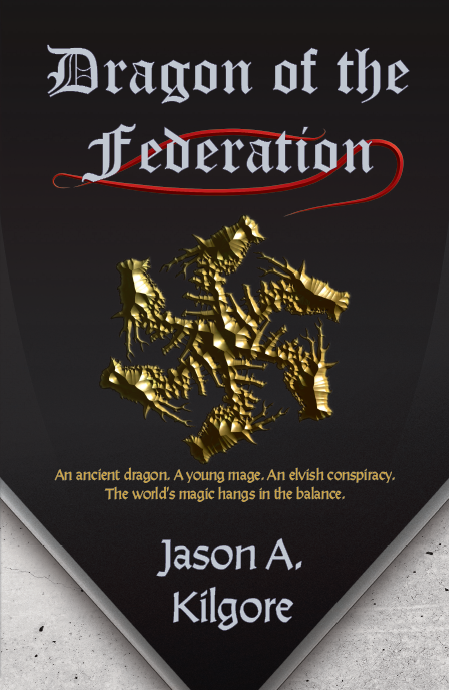
Two of my book covers were purchased from pre-made cover artists, for my scifi novel, The First Nova I See Tonight, and then again for my fantasy novel, Dragon of the Federation. Basically, there are a lot of different sites where you can browse a wide variety of covers, by genre, and find one that seems reasonably similar to what you’re wanting, as long as you’re not too picky. No, it won’t feature your special protagonist on the cover or have specific call-outs to a scene in your book, but you can easily find a cover that is eye-catching and probably close enough, with interesting fonts and good layout. The cost is usually very reasonable, between $100-$300, with packages that include both paperback, hardcover, and Kindle versions, and the cover artists will usually do some simple customizations.

I was so pleased with the cover from Dragon of the Federation, by an artist who goes by Iron Serif, that I (or really, the small press I’ve now signed with, GladEye Press) have hired him to make the cover for the sequel, Footman of the Ether, which is coming out in the spring and will feature a comparable motif to the first book’s cover. When I eventually come out with a sequel for my scifi book, I will probably hit up the artist for the first book as well, Ivan Zanchetta.

Where to go:


  • If you type “pre-made book covers” in Google you’ll find a plethora of sites. Book cover artists will advertise their images across many of them, so there’ll be repetition. I recommend you browse through several sites and find multiple cover options and prices before settling on one.
  • You can also find cover artists on Fiverr.com who offer pre-made covers.

Pros:

  • There are a lot of sites to choose from.
  • Most sites have a wide variety of covers to choose from, for many genres.
  • Prices are reasonable.
  • Artists will usually make small customizations.
  • Turnaround time is usually quite fast, since the covers are pre-made and they just need to adjust the text and make small changes.
  • Artists often offer packages that include formatting for paperback, hardcover, and ebook designs.

Cons:

  • What you see is what you get. Quality varies, but you’ll see it in the images provided on the sites.
  • Few, if any, customizations.
  • The cover might not be exactly what you want, but hopefully close enough. You’ll find a lot of “generic” sort of images to fit the genre.


OPTION 4: AMAZON’S COVER CREATOR

If you are self-publishing on Amazon, a fourth choice is a free app on their website, called the Cover Creator. You can bring your own image (whether you make it yourself or get it from a site like Unsplash or Pixabay) or you can choose from free images on the tool. You then choose from a variety of attractive cover templates, fonts, and color palettes, type in your text, preview it, and click “save and submit.” It will then generate a file that you can upload to Amazon’s KDP site when publishing there. It’s incredibly easy and fast.

I used this method, in addition to a license-free image from Pixabay, to create the cover for my book of poetry, Guide Me, O River. It cost me nothing at all, and I’m very happy with the result. As far as I know, Amazon is the only online publisher that has this tool.

Where to go:

  • HERE are guidelines for using the tool, along with a how-to video.

Pros:

  • The tool is free, fast, and easy.
  • There are lots of images, templates, and color choices to choose from.
  • Everything is automatically formatted for you.

Cons:

  • The tool is only used for publishing on Amazon KDP.
  • Though there are a number of different templates, there are only those templates to use. So if you want something truly original or unusual, then this isn’t the tool for you.


A WORD ABOUT AI ART

One final thought: There are a number of AI art generators out now, and you can quickly and easily generate really interesting art for free or nearly free, and customize it to a large degree by refining your AI criteria (and maybe further customizing it in an image manipulation software such as Photoshop). You could then use this art to create a cover using options 2 and 4, above. There are also cover artists who use AI for their work, which you can then purchase from them using option 3.

While generative AI is all the rage right now, be careful. Most AI art is flawed. I can spot it easily due to little glitches (like too many fingers on the hands, odd arm placements, or weird facial expressions like over-the-top smiles) and have a certain cartoony appearance. But AI is getting more powerful and more refined every day. It won’t be long before AI images will be indistinguishable from real photos. I’ve seen a few that were almost there.

It can’t be overstated that AI art isn’t truly original. AI trains on *already existing data* that pulls from existing art, so it’s all derivative. And nuanced details or symbolism are lacking. Want something truly original and meaningful? Hire a human artist.

And let’s face it: most likely the artists who made the art that the AI program is training on haven’t received a cent for it or given permission for their art to be used that way. This is creating an ethical and legal copyright dilemma that will ultimately be decided by the courts. It’s just too new, right now, to have those questions fully addressed. Personally, I prefer to support artists. But the fast and free nature of AI art is definitely tempting.


A WARNING ABOUT LICENSE AND ATTRIBUTION

Whatever image you use for your cover, you need to make sure you have a license agreement on paper before you use it, granting you rights to use the image to make the cover, to adjust it as needed, and to use it for promotional purposes for sale of your book. Even if it is free! How you negotiate this is up to you.

You also need to attribute the image properly in the front pages of the book, with the name of the artist and maybe the source of the image (if you found it on an image gallery site). As a courtesy, you might also list the artist’s primary website if they wish. Even if you generated the image yourself, it’s still important to attribute yourself so that others might not claim credit.


I know this is a long post, but there’s more to say about all of these things. Hopefully this will be a good introduction to get you started. I wish you well on your cover image journey.


Cheers and happy reading!


Thursday, January 18, 2024

I Want To Write Full Time

I have a day job, but like so many other writers, I dream of one day writing full time and making enough to make a living at it.

It’s a dream shared by so many other creative people out there: artists, musicians, dancers, poets. Our creativity is part of our core being. As we go about our daily drudgery, our minds often go to our work in progress (WIP) or our next big idea.

Don’t get me wrong. I actually enjoy my day job and the people I work with. I earned two higher degrees for it. And after that, I’ve worked hard at my career as a scientist for almost three decades since then, through hard times and good times. I now make enough to live reasonably well. I’m not hurting.

And yet, writing is in my blood. Every still moment, my mind goes back to my books. Coming up with the next plot point while waiting in the doctor’s office. Visualizing the action during a break at work. Hearing the dialogue as I make some tea. Thinking up ideas while in the shower. All day long, I feel an irresistible urge to be back at my writing desk to bring it all to life on the page.

But I have to bring in the money. I can’t make enough of a living on my writing yet to even live modestly. Not yet. I still have a family to pay for. Too many bills to pay.

After self-publishing four books on Amazon, I’ve recently signed with a small press, GladEye Press. They will cover the editing costs, cover image art, and maybe a bit of marketing, so that I can focus on the writing part and not have to shell out money ahead of time. They will also help get my print books distributed to brick and mortar bookstores. They take a massive chunk of my royalties for these services, but if distribution is significantly higher than what I was currently selling, it’ll pay for itself and more, and we both profit. They are in the process of republishing each of my books with their brand, and this spring will publish my fifth book, Footman of the Ether (a sequel to my fantasy novel, Dragon of the Federation).

Related blog post: Before signing with GladEye, here’s why I self-published.

There was a time, up to a couple generations ago, when it was expected that an author would only publish one book a year, and it was enough to make a living on. Publishers would actually limit authors to only one book a year (this is why Stephen King took the pen name of Richard Bachman, in fact, so that he could publish more often). Now, the expectation is at least three a year, and the author has to do much of the publicity themselves (unless you are big name, of course). If you don’t already have a huge following on all the social media channels to do that, agents and publishers won’t give you the time of day, much less actually pay attention to your query letters or read your submitted work. Trust me. I spent more than a decade playing that game before I self-published. I feel lucky to get accepted by GladEye Press, frankly. If you still want to self-publish, you’re going to have to publish a dozen books, do everything yourself (or pay for others to do them for you), and have side gigs (such as editing or tutoring) before you can maybe earn enough.

I don’t say this to dissuade anyone from hoping for one day being a full time writer, even if self-published. There are lots of writers who have make it. I’m just being realistic. Like entering any other career, you always start at the bottom and have to overcome obstacles, train hard, and work even harder. Just don’t expect to live like a (Stephen) king!

As for me, I have a plan. It may be too ambitious, I admit. But in three years, my financial responsibilities will lighten. Then, if all goes well, I’ll quit my day job, sell my house and most of my belongings, and move to a cheaper area to live in. I’ll live a more modest lifestyle, too. By then I should have at least 3-5 more books published, bringing in royalties. Maybe … just maybe … I’ll be able to make enough to live a modest lifestyle with a roof over my head and enough food on the table.

Is it a pipe dream? We’ll see. But I’m clinging to it with one hand and a pen with the other.

Is it your dream too? Let’s help each other make it happen.

Cheers and happy reading.

Sunday, April 3, 2022

Why I Choose To Self Publish

(Yeah, this post is long, but it's worth it, I promise.)


Before I tell you why I choose to self-publish my books, let me first give some back story....

I've been writing since the late 1990s. Back in those primitive times, when the internet was new, publishing wasn't what it is now. Back then, if you wanted to get a book published, you had to buy a massive print book called Writer's Market. This annual tome is still published every year (for about $21, and the Kindle version is only a couple dollars cheaper), and last November had its 100th edition printed. It advertises on Amazon with the following quote:

Want to get published and paid for your writing? Let Writer's Market, 100th edition guide you through the process. It's the ultimate reference with thousands of publishing opportunities for writers, listings for book publishers, consumer and trade magazines, contests and awards, and literary agents—as well as new playwriting and screenwriting sections, along with contact and submission information.

Did you catch that first sentence? Read it again. They literally still say that you can't get published or paid for your writing unless you buy that "bible" of writing and go through the "process" of getting published. (never mind that almost anything in that book is also free online these days, but I digress).

What is that arcane process, you ask? Well, their process is the same as it was in the 90s... First, you buy that book. Then you pore over it, cross-referencing all the publishers and agents with your book's genre. And if your book crosses genres or is some sort of niche topic, too bad, there's no room for you. They aren't going to take the chance at marketing it, particularly if you are a first-time author, which is another chance they aren't likely to accept.

But since all the big publishing houses won't accept unsolicited manuscripts, you have to first get an agent. So you send out query letters (back then, it was by snail mail) with whatever it is they want from you, such as a one-page synopsis and the first 10 pages of your manuscript. Or maybe the first chapter. Or maybe the first three chapters. And then you wait... and you wait... and you wait... And if they don't blow you off entirely, you might hear from them in, say, three months. (I've waited for as long as 10 months) until they reply to you. Usually it's a form letter. If you're lucky, it might add a sentence about why they rejected it. In any case, the language is usually something along the lines of "I'm sorry, but this isn't right for us right now. Thank you for submitting and good luck." 

In my day job I work directly with a wide variety of professionals, sometimes including large data files to examine. If I waited months to get back to them, I'd lose my job. But somehow in the literary agent world this is normal practice.

If, by some miracle, the agent actually requests a full manuscript, you feel overjoyed. After all, by this point you've submitted and been rejected at least many dozens of times. So you submit it to them (again, back in those days, it was by snail mail, and expensive to mail). And then you wait... and wait... and wait... and after many months they will most likely reject you with a similar form letter, and, perhaps, the courtesy of maybe a couple sentences as to why they rejected it. 

Oh the number of times I've seen writers on Twitter expressing how happy they are with their rejections because the agent or editor actually deigned to leave a few words beyond the form letter, as if it were an achievement to get it. Such wisdom! Such luck! Nevermind that it's yet another rejection to add to an overflowing pile of them. Oh well, that's just part of the process, right?

HERE is one of an endless number of author Twitter threads expressing angst about this process.

Some editors and agents request that you don't submit to others while they are considering your query letter or manuscript... because they are just that special, apparently.

Can you see how you can waste YEARS getting to this next step?

Oh, and these days an agent likely won't give you the time of day unless you already have a large "platform" (= an online presence that includes all the social media sites like Twitter, Facebook, and Instagram, with thousands of followers, a blog, and a professional website and newsletter). They want to make sure YOU can do marketing of a potential book, you see. Don't have all that? Oh well. Rejected.

If, by yet another miracle, the agent likes what you've sent them and you have a great platform, and she decides to accept it (congratulations!), then begins the next step where the agent markets your book to publishing houses. And you wait... and wait... and wait. 

And if by (you guessed it) yet another miracle a publisher accepts it, then begins the year or two process of moving it through various editors in the publishing house, and where THEY decide what cover it has, and ask for you to re-edit the book to fit their needs or topics, and you have to do it on their timeline (I've even heard horror stories where the publishing house decided at this point to just drop the book entirely and never let it go further, despite how you clawed your way to that point, and the book is stuck in publishing limbo, perhaps forever. But again, I digress.).

At last, your book is released and you get paid a nice tidy advance of maybe $2000 or $3000, before taxes. Congratulations!! Mazel tov! You are in the less than 1% of writers who actually get published by the "traditional" route. Pop the champagne! Now you can bask in the glow of validation and your book will go to all those hungry readers. 

But the publishing game doesn't end there, does it? The great thing about traditional publishers is that they are IN with distributors, and your book will be sent out to lots and lots of book stores and outlets. But they will only do so much of the publicity. YOU still have to do a lot of it. And you aren't going to see a dime of royalties until your book profits by at least the advance that they paid you, if ever. And IF it turns a profit, you will only see perhaps 10% in royalties. Your agent will also take a 15-20% cut of that (and of your advance, too). And ALL of the decisions about things like the cover, the distribution, the sale price, and how it is marketed, is THEIR choice, not yours. They have creative control, and they own the rights to your book, not you. And if your book isn't profitable, they will drop you like a stone. After all, they are a corporation and need to make profit. Your creativity is not important. They still own the rights, which means that your book isn't going to sell anywhere at all unless they decide to print more of it - which they aren't going to do unless you or your agent convinces them that it will be profitable again. If your book is profitable, then you still have to wait months for the check to be sent to you.

I should apologize if I sound jaded. But I spent the better part of two decades playing, and failing, the traditional publishing game. 

Enough of the backstory. Now getting to my point...

Things have changed in the last decade. What's changed is that self-publishing has become SOOOOO much easier, thanks in largest part to Amazon. 

Back in the 90s and before, there was this concept that self-published books were dreck. The reputation was that they were published by the author themselves at some small press, at a loss, for the sake of their own vanity. It was looked down upon. It was said that such books were low-quality, badly edited, and likely was some rich or egotistical person wanting to claim the title of "author" so they could boast to friends. At least, that was what you were told as a young author just starting in the field. To be respected, you had to follow the traditional publishing route that I described above.

There's still this attitude out there. People still look down on self-published writers, believing their books are full of typos, poor writing, and awful plots, without even trying to read them for themselves. In fact, it's still so prevalent even among writers that the Writer's Market is still high in the Amazon ratings and agents are overwhelmed with hundreds of query letters. Pitch events on Twitter are swamped with entries. Agents and publishers have no shortage of writers to pick from. HERE is a good example of a writer who totally looks down on self-published authors, going so far as to say they "act like fools", look like "amateurs", do it for their "ego", and could never make a living at it (even though he admits "traditional publishing means living in poverty", lol).

In fact, I have writer friends who have had completed manuscripts sitting in a drawer for as much a two decades because they couldn't get it accepted for traditional publication anywhere and just gave up. I've read some of them. They're genius manuscripts. When I pointed out that they could just self-publish it and could have been making money on it all this time, they poo-poo'ed the idea. It just wouldn't be a valid choice, right?

To be fair, I have read a couple self-published books that were badly edited or had plot holes, etc. The traditional publishing houses require a manuscript to go through several editors before it is published, and those editors will most likely catch the typos, weak verbs, or plot issues. But anyone who has read lots of traditionally published fiction books can still tell you about the books that were awful anyhow. And let's face it, having a few typos or cliches in them doesn't mean the book isn't entertaining. I've also read amazing self-published books that had no editing problems or typos and were amazing and entertaining reads. In fact, NEARLY ALL of the self-published books I've read were just as entertaining as traditionally published books I've read.

Amazon's KDP site (which stands for Kindle Direct Publishing, but is no longer just Kindle because they merged with CreateSpace, the leading print self-publishing site) has made the process of getting self-published so much easier. It is now the leading way that books get published. 

Back in 2014, the "big 5 publishing houses" owned around 45% of the publishing market. By 2016, that number had fallen to only about 20%, while self-published books had grown to nearly 50%! In other words, their percentages had flipped. In 2018 alone, more than 1.67 million books were self-published. I don't know the numbers for 2022, but I am certain that the percentage of traditionally published books are far lower now than they were back then.

All of this has traditional publishers running scared.

I've now self-published four books in the past three years, with more coming along. I don't even bother with agents, submissions, or the rest of the traditional route anymore. 

Why? Let me count the ways...
  • I have complete creative control with no "gatekeepers"
  • I work on my own timeline
  • If I need to change the book and release a new version, I can do it immediately
  • I control all rights to the book
  • I control how it is marketed
  • The book is available to readers at any time, and forever, unless I should make the decision to unpublish it
  • I get around 70% royalties with ebooks and about 60% for print books
You'll notice the word "I" used in there a lot. It is about keeping my freedom, control, and profits to myself.

But it's not all icing, you know. Here are some major drawbacks to self-publishing:
  • You have to fight the stereotype that you are not a "real" author
  • Traditional publishers still own the major print book distribution networks... for now
  • You have to be your own publishing business
Don't underestimate that last point. There's a LOT wrapped up in that single sentence. As a self-published author, YOU have to do all the work. I'm not just talking about the writing. It doesn't end when you write "The End" on the last page. There's still the editing. The formatting. The cover image. Advertising. Marketing. Promoting. You can try to do all these things yourself, or you can pay knowledgeable freelance people to do these things for you. Regardless, it's a long road with a steep learning process.

For me, it's a mix. I've been in the writing biz for quite a long time. I have a great editor who doesn't cost a lot, as well as a writer's group (HERE is my editing process). Out of my four books, I've made my own cover image for one book using a photographers image that I purchased, used an Amazon tool to make another for free, and purchased two pre-made cover images from freelance artists. I did the book formatting myself, which is made very easy using tutorials on the Amazon KDP pages, for both print and Kindle versions. Advertising, marketing, and promoting are mostly self-taught and made by me, though I have utilized some services. Most notably I use Amazon ads reasonably successfully, and I have become very savvy (in my humble opinion) with promoting my book with a mix of social media postings, some inexpensive services, and plugs by various websites, blogs, and podcasts. But regardless of how much you do yourself, you will not make a profit at first. Like most any other form of self-employment, you have to spend money to make money, and it may take a long while before you start to make a profit. If you are serious about self-publishing, you have to play the long game. In fact, three of my books haven't quite turned a profit yet. But they soon will, and over the rest of my lifetime will make me far more in royalties than the tiny fraction I would likely get if I managed to publish them with traditional publishing, even including the advance I could have gotten.

Will I ever be able to quit my day job and write full time? It's the dream of every serious author, isn't it?

There are more and more authors out there who make a living at self-publishing, and do so full-time. From what I can tell, it takes something like 10 books published before you can make it full time. And most of those authors have income streams from their writing outside of just their royalties, just like most any other self-employed person out there. In addition to royalties, we can also offer editing services, review services, merchandise for our fans, Ko-Fi or Patreon page income, and teaching courses on how to do all those things I mentioned above to other authors.

The bottom line: Self-publishing is a valid form of publishing, a potentially profitable way to make money in the long run, and an increasingly common and easy way to get your book out there while retaining all the rights and creativity. But to do it right, it requires a LOT of work, a daunting amount of up-front spending, and a lot of learning about marketing and promoting yourself.


Cheers and happy reading (and self-publishing)!


Further resources and advice:

Most Popular Posts