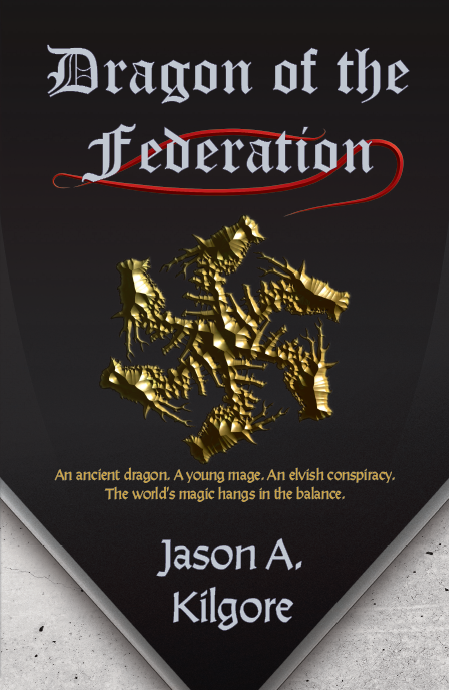
Click on the banner to visit Jason A. Kilgore's Amazon author page
Showing posts with label writing tips. Show all posts

Wednesday, June 24, 2026

Author Questions: What Excites You Most As An Author?

This is an ongoing series of “questions every author avoids answering” (based on this video by Dale L. Roberts) and my answers to them. I recommend every author ask themselves these same questions to better understand themselves and their art.


Question:

What excites you most as an author?


The quick answer:

Sharing my stories with new readers.


The long answer:

There are a lot of exciting times as an author. I love coming up with ideas for new stories and daydreaming about them, like watching a movie of the story come to life in my imagination before I ever type a word. It’s a small excitement, sorta like seeing a piece of chocolate cake and knowing you’ll get to eat it.

There’s also that moment when you first sit down and start typing to bring the story to life, as if you were giving birth to the idea (I know that sounds corny, but stick with me).

Or there’s the excitement and satisfaction of writing “The End” at the end of your first draft. Oh, that’s a good one! In fact, that was almost my official answer to this question. It’s a moment that you celebrate in some major way. I buy myself a small luxury when this happens.

The moment when the first author copies arrive and you get to open the box and hold your creation in your hands, that’s also a good one, particularly for your first publication. Here’s a video of the unboxing of my first copies of Dragon of the Federation. You just want to take that book, do a little ritual, climb to a high rocky prominence, and present it to the world with some epic music in the background, à la Simba’s birth.

Oh, and there’s also the excitement of walking into a bookstore and seeing your book sitting there on the shelf next to all those other published authors. That’s always a very validating moment (it’s even better when you knew it was there and then is gone the next time you walk in, because it was sold to someone!).

But truth be told, nothing gives me as much of a rush as a new reader who has come up to my table, heard my pitch for a book, and their eyes go wide, they say “Oooo!” as they learn about the interesting premise of the story, and they eagerly want to start reading my work. Dear reader, now you are as excited as I am. How wonderful that we share that!

Sometimes I think it’s a bit of an ego trip. Like my inner child is yelling “I can’t deny the fact that you like me! Right now, you like me!” lol. Yes, I feel that, every time.

But it’s not just ego or vanity or whatever. There is an overwhelming joy that I, and most authors, feel in sharing our creations. Bringing our characters to life in our head isn’t enough. It’s far more satisfying that they come to life in YOUR head, too, and in your own imagination, however different that character may be for you. It’s not just about the money we earn or the volume of sales or spreading our “brand” or whatever. Sharing is caring, right? Those moments that you spend reading my books, we are sharing a common imagination and bringing that world to reality.


Cheers and happy reading!

Friday, April 17, 2026

Author Questions: What scares you most as an author?


This is an ongoing series of “questions every author avoids answering” (based on this video by Dale L. Roberts) and my answers to them. I recommend every author ask themselves these same questions to better understand themselves and their art.


Question:

What scares you most as an author?


The quick answer:

That I won’t be able to get all the stories out of my head and onto paper before I die.


The long answer:

Yeah, I know, it sounds a little corny, but it’s true. You see, I’m not afraid of anything. I have no fear of dying (I’ve nearly died several times, in fact, including twice by nearly drowning). No fear of spiders or creepy crawlies (I’m a trained entomologist, actually!). Heights give me the willies, but I’ve conquered it. Darkness? Bring it on. Claustrophobia? Nah, I’ve gone spelunking and did fine. Ghosts? I literally grew up in an actual haunted house. I can deal with it.

No, it’s all about my stories. I have endless stories locked in my head, waiting to get onto paper. My fantasy world, Irikara, in particular, has more tales to tell than I could ever write. It’s a vast world, and sometimes it’s more real to me than the real world. I can point to any place on the giant map and tell you what the languages sound like, the smells of the streets, the migrations of the people, the gods, the heroes, the villains, the government structure, and the present and distant past of the land, and so much more.

But if I die, it all dies with me! Imagine being the gatekeeper to an entire world – the sole person who can share it with everyone else – as if you were an alien from a distant planet and only you could share your homeworld with the entire population of Earth. Seriously. That’s what if feels like.

I wonder if other writers share this odd fear.

Tuesday, March 17, 2026

Author Questions: What’s the Worst Writing Advice You’ve Ever Heard?

This is an ongoing series of “questions every author avoids answering” (based on this video by Dale L. Roberts) and my answers to them. I recommend every author ask themselves these same questions to better understand themselves and their art.

Image generated with ChatGPT

Question:

What’s the worst writing advice you’ve ever heard?


The quick answer:

"Only write what you know."


The long answer:

This is actually a common bit of advice you’ll hear as a writer, often delivered with an air of pomposity, and I couldn’t disagree more.

At the heart of the statement is the idea that authors put a part of themselves into their writing, whether they mean to or not, and if you want to come off as genuine, you should avoid putting in your story/book/essay anything that would seem beyond your own experience. Makes sense, right?

Not at all.

Maybe this is true for memoir/autobiography writers. After all, you wouldn’t want to lie about your own experience and sell it as authentic (like this author did). And if you’re writing other non-fiction, then, yeah, you need to do your research and make it accurate. You wouldn’t want to lie about your sources or make up facts (as this author did).

But if you’re writing fiction, “only write what you know” is the worst advice. The entire POINT of fiction is to escape reality and see things from alternative points of view. The two point of view characters in my first fantasy book, Dragon of the Federation, are an elderly dragon and a young female mage. What do I know about being elderly, much less an elderly dragon? I’m also male. What do I really know about the experiences of any females? Or, for that matter, elves, demons, evil generals, ghosts, space nuns, space opera heroes, or all the other weird POVs I’ve written over the years. If I took that bit of bad advice, I wouldn’t have even started those stories.

Dragon of the Federation was released in 2021, and so far no one has come to me to tell me that I got it wrong. Nor for any of my other stories or books.

When I point this out to those who give this advice, they tend to stutter and backtrack and justify their statement by saying that I must be very imaginative to think of life as a dragon, and that my observations of the female condition must be very good. Maybe that’s true. And to be fair, I’ve tried to have “sensitivity readers” read my work who are more like the lead characters (when possible. There aren’t exactly real dragons flying around).

But we can’t go around stifling creativity.

So consider this your official approval to write whatever you want, no matter how outside your experience it is. Feel free to explore and create. And if someone tells you it isn’t accurate, ask them how, then go back and revise, but don’t give it up.


Cheers and happy reading!

Tuesday, March 3, 2026

Author Questions: What’s the Best Writing Advice You’ve Acted On?

This is an ongoing series of “questions every author avoids answering” (based on this video by Dale L. Roberts) and my answers to them. I recommend every author ask themselves these same questions to better understand themselves and their art.


Question:

What’s the best writing advice you’ve acted on?


The quick answer:

"Good writing is emotional writing."


The long answer:

There’s a book entitled The Emotional Craft of Fiction, by Donald Maass. On the back of my copy of the book, the blurb says “engage your readers with emotion” and “If you want to write strong fiction, you must make your readers feel. The reader’s experience must be an emotional journey that aligns with your characters’ struggles, discoveries, and triumphs.” If you don’t have this book, dear author, I highly recommend you purchase it and read it.

This, to me, is the one best piece of advice I’ve ever found for writing compelling fiction. It goes of other forms of entertainment, too, such as poetry, script writing, memoir, acting, composing, singing, sculpting, or dancing. Anything that uses your creativity is a place to insert your emotions.

Have your characters react emotionally. Make them struggle. Torment them. Have them claw their way out of the holes they’ve dug, only to be kicked back down and have to struggle back up and finally climb out. The reader will be right there with them experiencing the moments of struggle, sadness, and joy. Take them on an emotional rollercoaster. That’s what fiction is for, after all. It’s to experience all the things that we are afraid or unable to experience in real life, and to walk in the shoes of someone else for a little while. Keep it exciting. Never be boring.

And it needs to be emotional for you, as the author, as well. Feeling angry about the state of the world? Lonely? Happy about a success? Whatever you are feeling, pour it into your writing that day. Everything an author writes has some little bit of the writer’s persona in it. You can’t help it. So own it! Pour your feelings into your words. It will come through to the reader and bring with it a powerful impact.


Cheers and happy reading!

Friday, February 13, 2026

Author Questions: What Habits Keep You Moving?

 This is an ongoing series of “questions every author avoids answering” (based on this video by Dale L. Roberts) and my answers to them. I recommend every author ask themselves these same questions to better understand themselves and their art.


Question:

What habits keep you moving?


The quick answer:

Schedule my time as best as possible and stick to it.


The long answer:

A few years ago, my writing was in disarray. I was still actively writing, but I had trouble juggling my time. In addition to finding time to write new material, I was coordinating author events, dealing with blogging and social media, marketing, writing newsletters, and a whole host of other author activities, in addition to working about 50 hours a week at my day job, running a household, and “life in general.”

Luckily, I had a friend who was a life coach. I met with her many times, and she helped me figure out a weekly schedule that balanced all of those activities. I not only had a written schedule to keep to, but I also tracked my time and what I was doing. The schedule kept me on track, and the tracking of time made me realize just how much I was doing and where I needed to focus.

That was almost three years ago, and I have stuck with it. As a result, I am more coordinated, focused, and efficient at all of my author activities.

Our lives are complex, and it’s okay if you can’t find time, or if you go off schedule. I know of some authors who write in the morning for several hours, some who write in the evenings, and even one author who dictates her writing to her phone as she drives between work and home.

And while there are authors (usually full time) who say you should write X hours every day or Y number of words, don’t pay too much attention to such absolutes, everyone is different. Do you need a life coach to help? It can’t hurt, but it’s not always necessary (though I do recommend you find a writing coach, like me). Find what works for you and stick with it.


Cheers and happy reading!


Sunday, February 1, 2026

Author Questions: What Is The One Thing You Wish You Knew Before Publishing?

 This is an ongoing series of “questions every author avoids answering” (based on this video by Dale L. Roberts) and my answers to them. I recommend every author ask themselves these same questions to better understand themselves and their art.

Question:

What is the one thing you wish you knew before publishing?


The quick answer:

Marketing.


The long answer:

I’m guessing that wouldn’t have been the answer you expected. You probably expected me to say something about the craft of writing, right?

I know writing. It’s my aptitude. Making up worlds and characters and describing them on paper is what I do. It brings me joy.

But what happens after you write “the end” and manage to either publish it yourself or get it accepted and published through a publishing house? Just go on to writing the next book?

Maybe it was that way fifty years ago or more, but it certainly isn’t now. Ernest Hemingway didn’t have to learn Amazon ads or Facebook ads. J.R.R. Tolkien didn’t have to post about his books on the numerous social media platforms and get thousands of followers there. Octavia Butler didn’t have to learn Adobe Photoshop enough to put together engaging graphics. Truman Capote didn’t have to make his own website or post regularly on a blog. Isaac Asimov didn't have to send out newsletters every month. Stephen King didn't have to man tables at festivals to sell his books. The thought of these authors doing those things feels a little silly, and yet these things are expected of authors these days. It’s a whole new ballgame now. In fact, only about a third of my author-related time is spent actually writing, editing, and revising my books, whereas back then nearly all their author-related time was spent that way.

These days, after you publish the book, the job isn’t over. You have to get it in front of readers somehow or no one will learn about your book, much less buy it or read it. Large publishing houses have massive advertising budgets and people hired to do nothing else but advertising and marketing, but small presses and self-published authors usually don’t. You have to do it all yourself AND compete against those large publishing houses with their big budgets. Good luck.

And what the heck do we writers know about marketing? I certainly never got training. Thankfully, I’m pretty tech-savvy and have some Photoshop skills. I also had the foresight to lay a good foundation to create a brand prior to publishing my first book, with a social media presence, a logo, brand name (“The Strange Worlds of Jason Kilgore”), blog, and website. I worked as a scientist in an international biotech corporation and had picked up some things. But that was only the barest step up.

Over the years I’ve read so many articles and books that it makes my head spin, and attended workshops, too. Most of what I’ve learned was through trial and error. What I really needed was a mentor who knew the ropes, but no one gives you their knowledge for free.

These days, I help other authors make Amazon ads and advise them on social media posting. It took years to get to this point. But I still feel inadequate at it. Competing for people’s attention, especially online, is mind-shatteringly hard, and the margins are razor-thin.

It’s also incredibly expensive. At least a third of my annual author budget is spent paying for ads, but it’s hard to say if they pay off. When someone buys a book, they don’t send you a message telling you how they heard about you. 

You can also pay people to do advertising for you, such as on gig sites like Fiverr.com, but be cautious. There are a LOT of scammers out there and amateurs who will take your money and give you nothing useful in return. It's better to go by word of mouth... if you can find an author who has actually paid someone and been satisfied. It's also insanely expensive.

If I had it to do all over again, I think maybe I would have taken a marketing course before publishing, preferably one aimed at authors and taught by an author.


Cheers and happy reading!

Saturday, May 3, 2025

Why Have A Prologue In A Fiction Novel?

Why not just start with Chapter One? Is a prologue just fluff you can skip over? Why write it at all? Like everything else in a book, a prologue has to do work, but not every book needs one.

The prologue serves purposes that are entirely different from other chapters. If it didn’t, it would just be “Chapter One.”

Image by Rowan Freeman
via Unsplash.com

Before I continue, here is a good page that defines the differences between a prologue, preface, introduction, and forward, so I’m not going to redefine them here. I admit that I’ve mistaken these before. All four are different types of “front matter.” That first link defines a prologues as follows: A prologue sets the stage by bringing the reader into the story before it begins. But in my opinion, there’s more than that.

There are differing philosophies for what a prologue is supposed to achieve. My philosophy is that the prologue in fiction should achieve three goals: 1) Introduce the setting and genre (as would Chapter One if the prologue were not there), 2) give a sneak peek for the reader at the plot or important plot points that will later become important or clear to the protagonists (and thus setting up the reader for something important), and 3) introduce important aspects of the story that might not otherwise be introduced right away in the first couple chapters.

This is the “work” that the prologue does for the novel.

In a way, the author is opening a door for the reader, revealing a world and its complexity, before launching into the first step of the journey together.

For instance, I had a prologue for my fantasy book, Dragon of the Federation. That prologue quickly introduced that the story was 1) set in a fantasy world rich with history and competing cultures, 2) introduced pivotal characters who weren't the protagonists and an inciting act that later was revealed as the start of a deep cabal that influenced the entire plot, which the protagonists would later discover, and 3) introduced in a big way some of the fantastic sorts of magic in a way that was action-packed. These things allowed me to introduce the protagonists and their struggles in the first few chapters in a slower, more thorough manner without resorting to some sort of "bang" moment or relying on big magic to do it.

Could the book have gone without it? Sure, but I think it would have seemed like it started too slow to "hook" the reader. With the prologue, the reader was already hooked and was ready for a deeper introspection of character. This prologue also serves as a sort of introduction to the whole seven book series I’m writing (it's the only book in the series that will have one. The last book will have an epilogue, too).

Do all books need a prologue? Certainly not. Most novels don’t, and arguably don’t need it. But it can be enlightening and even necessary when it is there, and I recommend you never skip them as a reader.


Cheers and happy reading!

Sunday, March 30, 2025

My Peculiar Philosophy About Effective Short Stories

Writing short stories isn't like writing long fiction. It’s a different beast entirely. But I have a particular philosophy about writing short stories that many authors don’t ascribe to, and I’m wondering what you think about it.

Photo by 愚木混株 cdd20 on Unsplash


I’ve published books and I’ve published short stories and short story collections. There’s a lot to be said about the differing strategies between them. But this post isn’t about the differences between novel writing and short story writing. Perhaps that is a post for another time.

Instead, I wanted to share a peculiar philosophy I have about short story writing.

Short stories share much in common with long fiction. They have a beginning, middle, and end. They have a story arc and character development. They have a climax and denouement. Short stories just have to be more focused. With fewer words to work with, the writer has to be more concise and constrained. Instead of building multiple plot arcs, they are limited to just one or two. Typically there is only one point of view character. Every word has to do work.

The thing is, a good novel will tidy things up by the end. All those plot arcs come together to a (hopefully) satisfying conclusion. Some books, as part of a series, might have a cliffhanger to draw you into the next book of the series, but you can’t do that will all of the story arcs or it will leave the reader unsatisfied.

A good short story, though, will focus on one plot arc, and at the end, the reader comes to a satisfying conclusion.

But here’s my peculiarity:

It’s okay, and even preferable, to create some mysteries along the way, which might never be answered. Also, if the story is well-written, it leaves the reader wanting more.

For instance, in my fantasy short story, Into the Ruined Lands, two girls buck their patriarchal society and risk the ire of their fathers to venture into the neighboring volcanic wasteland. From the story blurb:

Two teen girls, Talay and her cousin Shaali, defy their cultural norms and run away to the volcanic Ruined Lands in search of a flowering plant called sulfur wort, a necessary ingredient for a healing potion to be mixed by the mysterious Old Mother Aya in order to save the life of Shaali's younger sister. But the Ruined lands pose dangers that challenge hardened warriors. Are they up to such a quest? And are they willing to face the punishment for defying their patriarchal society? 

There they face a hostile land, filled with dangerous orcs who wish to defile them or eat them. Old Mother Aya also uses her magic from afar to help them in their quest.

But here’s the rub: I never explain the true nature of Old Mother Aya or her past. I don’t describe why the girls’ society is patriarchal or misogynistic. I don’t detail how the healing potion is made, or how the old woman casts her magic. I don’t go into the history of the Ruined Land or much into why society fears it.

And most importantly, I leave it open as to what becomes of the girls in the end. Yes, the story has a conclusion, but then what? At the end, one of the girls follows Old Mother Aya, wishing to learn her ways. But I don’t describe what those ways are, or what eventually comes of it. All I do is hint at what’s to come.

A good short story should leave the reader wanting more. A strong character, and effective worldbuilding, means that there can always be more to the story. I take it as a matter of pride when one of my readers says, “What happens next? This could be the start to a great book!”

What do you think?


Saturday, August 3, 2024

Which Kind Of Writer Are You: A "Pantser" Or A "Plotter?"

You’ve got a great idea for a novel, but how should you go about it? Are you a “pantser” or a “plotter?” Are you a “writing wanderer” or do you prefer a map for your writing journey?


(image by Glenn Carsten-Peters via unsplash.com)


First of all, let me say that every fiction author has their own method for writing novels. Do what works best for you! But after writing four fiction novels (three of which are published so far, plus my current WIPs, and a couple other books that aren’t novels), I’ve had some experience with this.

Generally speaking, the popular notion is that there are two camps: “pantsers” and “plotters.” Pantsers are writers who “write from the seat of their pants” without using any plotting at all. “Plotters” (sometimes called “planners”) are writers who outline a book ahead of time. I’ve written both ways.

As I see it, writing a novel is a journey. Plotting is like unfolding a map to guide that journey. That map guides your way so you don’t get lost along the trail, helps you choose the most efficient path and see the pitfalls, and you know your destination. But maybe you are a pantser, a sort of “writing wanderer,” preferring to explore the wilderness of your story. Getting lost along the way can be exciting, with unexpected obstacles to overcome. If so, your writing experience is not about the destination, but the journey to get there, wherever that may be.

Stephen King is a famous pantser, as he described himself in his book, On Writing, a book that is often cited as a sort of textbook on how to write novels (though about half of it is an autobiography and, frankly, King broke a lot of his own rules, particularly in his early books that made him big). He goes so far as to say, “Outlines are the last resource of bad fiction writers who wish to God they were writing masters’ theses.” Wow, okay. But he enjoys discovering the book with the characters and being surprised by the ending.

John Grisham is an example of a famous plotter. He has said, “I’m doing the outline [of my story] upfront so I always know where I’m going. I work on the outline for weeks, months, sometimes even years if I can’t get it right. But when I start the book on January the first to finish by July the first I’ve got a clear outline—I know exactly where the story’s going— I know how it’s going to end.” Given that he’s published at least 74 books (about as many as King), 47 of which have made the New York Times Bestsellers list (King has had only about half as many), it sort of blows away King’s statement that he’s a “bad fiction writer” because he makes outlines.

In fact, King and Grisham had an online discussion with each other that included this very topic. King asked Grisham if he ever wrote himself into “a blind alley,” and Grisham responded quickly: “No.  I don’t write the first scene until I write the last scene.  So I always know where I’m going.” This must have made King’s head explode, since in On Writing he likened this to “eating dessert first.”

As far as I can tell, the term “pantser” may have come about from NaNoWriMo, an annual event where writers attempt to write a draft of a novel in just a month. From their website: “National Novel Writing Month (NaNoWriMo) is a fun, seat-of-your-pants approach to creative writing.” Who has time to do careful plotting when you only have a month to write a book, after all? (Personally, I can’t imagine being able to write a quality book in such a short amount of time, even as a draft, in part because I have a 50 hour work week dayjob and a life outside of writing, too. But I digress.).

When I wrote my first novel (which is still unpublished), I was a pantser. I had a great idea for the start and some general ideas of what I wanted to have happen in scenes throughout. I had some characters in mind, too. But for the most part, I just let the ideas flow. Pantsing is a free-form storytelling. You, as the author, let the characters and action guide the story. You’re along for the ride, exploring the plot as it develops, which makes the process of writing more fun, at least at first. You’re as surprised as your readers will be when the plot twists. You get started writing quicker. The ending is an exciting discovery! I experienced all of these things as I wrote mine, and it was really interesting to see where the story went.

The problem with pantsing, though, is that you can’t see around the corner. Without knowing what’s coming, you can’t build in foreshadowing. You can’t develop the characters, plan the setting, or place important items along the way. You can’t as easily build up to events. This can lead to what writers call “the messy middle” – a situation where the plot and subplots just seem to fizzle or go astray, and you have trouble bringing them together, sometimes resulting in writer’s block. And the ending can fall flat. Coincidentally, Stephen King is often criticized for having poor endings. I wonder if this is why. The book I wrote as a pantser also had a “messy middle”, years to write, and it took far too many words to bring it all together. In fact, the first draft was a whopping 220,000 words! (I eventually pared it down to about 122,000 in a later draft). I think the ending was good, but maybe it wouldn’t be satisfying to everyone. It was bittersweet.

A hybrid approach is to write a synopsis or a partial outline. This would include a beginning and ending, significant scenes you expect along the way, and character descriptions. When I wrote my second book, which became Dragon of the Federation, a high fantasy novel, I used this hybrid approach. I basically wrote out a one-page synopsis with paragraphs describing the important scenes and characters. I had a defined beginning and ending, and the scenes acted as crucial stepping stones along the way. This approach worked pretty well, but I had to be very careful along the way to make sure everything came together, particularly since it was told from two different points of view. It took me years to write it. At some point in the middle, I wound up making a more careful outline using Microsoft Word in order to keep it all coherent. That was the moment I realized the full strength of proper outlining. Once I made it, the story came together in a much more seamless way and the writing went much quicker.

Plotting involves making an outline of each chapter. But even before that, it’s a good idea to write a one-page synopsis, or even an “elevator speech” (one or two sentences on what the book is about, as if you were describing it to someone during a short elevator ride), to summarize the book and it’s important concepts. The outline might be as simple as a short description of each chapter, or it might be as thorough as carefully describing each character’s motivations and actions, character arcs, settings, and how they weave into subplots. Again, everyone is different.

The third novel I completed became The First Nova I See Tonight, a fun science fiction space opera novel. By this time I had a lot of real-world experience with writing and had a better idea of what worked best for me. From the very start, I began with an “elevator speech.” Then I wrote a general outline of the book, chapter by chapter, each with a short paragraph of the character actions and story plot. After spending some time trying to visualize the book as a sort of movie in my head, I then created an Excel document with each of those chapters as a separate line and a few sentences of what was going to happen in each chapter. Since this was a fast-paced novel with lots of action, I wanted shorter chapters and a shorter overall length, so I aimed at an average of about 2000 words per chapter. This gave me an idea of how many chapters for a final length of around 80,000 words (in the end, I was just under that at about 79,000). Once I had that groundwork done, I started writing the book. I found that the outline was tremendously helpful. Even while working a full time job and having an active lifestyle, I still wrote the draft in about a year. Writing it was lots of fun, I didn’t have the “messy middle” problem, and the ending came together smoothly on the first try. I wasn’t rigid about my outline, however. I allowed flexibility, moving chapters around a bit, combining or separating chapters, and allowing the characters to develop in their own ways, which changed the outline a bit as I went.

An excerpt from the "visual outline"
I created for Footman of the Ether.
The fourth novel I published, Footman of the Ether, a sequel to Dragon of the Federation, also used this plotting method. It, too, went more quickly. The outlining helps pace the book and judge the length. But because it was told from four points of view (POV), I had an additional outline: a “visual outline.” This visual outline was a color-coded guide of how the four character viewpoints weaved through the novel. See the image attached here. Trust me when I tell you that involving multiple POVs makes the writing of the story much more difficult, as it requires careful balance. I doubt I’ll ever do more than four in one book, for this reason. The challenges of writing multiple POVs is a topic for a future blog post.

In another later blog post I will go into more detail on my current plotting method. For now, though, I hope this article gives you a good idea of the differences between pantsing and plotting, and a hybrid of the two, and their pros and cons.


Cheers and happy writing!

Thursday, March 21, 2024

Should You Get A Writing Coach?

You want to write the best book you can, but there’s so much to learn. Can a writing coach help you? Keep reading….

Image by John Schonobrich from Unsplash

Writing a book isn’t just about putting words on paper. Congratulations if you’ve gotten that far. Really. I can't tell you how many people I've talked to who say "I've got this great idea for a book," but never seriously tried to write. 

But there’s so much more to it. And I’m not even talking about spelling, grammar, sentence structure, plot, characters, and all of the “craft” of writing. We will assume for the moment that you’ve taken English classes and a good creative writing class. What comes next?

This is where you need a writing coach. There’s a lot they don’t teach you in that creative writing class when it actually comes to the business of being an author. Here are just a few of the basic questions they could help you with:

  • What program or app is best to use? Microsoft Word? Google Docs? Scrivener? The days of simply writing on a pad of paper or a manual typewriter are long gone. You have to get those words into a digital format.
  • How do you manage your writing time? We have busy lives, after all. Most writers still have day jobs. Many of us have children to raise and households to run. We have active lives. Where can you fit in writing time?
  • Should you make an outline? What does that even entail? There are different kinds of outlines. Which is best for your kind of book?
  • How do you find an experienced editor?
  • How do you query a book to get an agent or publisher?
  • Do you need an author webpage? How would you go about doing it?
  • What sort of social media sites should you have an author page on?
  • How does one promote or market a book after it’s finished? Will the publisher take care of that? What if you self-publish?
  • Should you join a writer’s group?
  • How do you go about designing a book cover and image?
  • Should you self-publish? Or should you try to get published traditionally?
  • Should you have a writer’s blog?
  • What sort of writer events should you do after publishing? Book fairs? Author tables? Public readings?
  • How do you handle the finances? Do you report book sales on your taxes?


And there’s so much more. When you stop to think about it, really think about it, the actual writing of your book is just a portion of the overall picture of your writing journey. And if you want to make a living from your writing, especially if you self-publish, then you need to learn how to make it a business and wear many hats. It can be a bit dizzying.

Enter the writing coach.

A good writing coach can bring order to the chaos, step you through the process, and help you build a good foundation to build on. You can’t be expected to know it all. They can lend their experience and organizational tools. They can answer the questions I posed above.

Like any other professional, they should be paid for their service, and this would be negotiated with them. But I assure you, it is worth paying for.

Recently I had the opportunity to be a writing coach for two different authors.

One is an author who has published a book and who has been in my writing group for years. Our group recently moved to being all-virtual, and she needed help understanding how to use the technology, namely using the virtual meeting app (Discord), uploading and downloading manuscripts from Google Docs, and how to leave comments on the virtual copy of a manuscript. We had several virtual sessions, and one in-person session, each about an hour long. I believe she now understands how to do these things, giving her the ability to continue benefiting and contributing as a member of our writing group.

The other person I coached is a beginning writer who has a great book idea (an autobiography with a bit of self-help added in), and she has a very compelling life to learn about – and learn from. But she needed help understanding how to outline the book, how to structure the sort of book she wants to write, how to do voice-to-text in different writing programs, and some general information about the business of publishing and marketing books. We had a phone session for about an hour and a half, and then an in-person session of about four hours. I really enjoyed sharing my knowledge, and I believe she feels better about the processes we talked about and more confident about proceeding.

And I’ve had a coach, too. Well, sort of: she’s a life coach, actually, not a writing coach. I needed help from Danielle for a very specific goal: to help me better organize my writing time each week. Over several sessions, we hammered out a weekly schedule and realistic expectations for my writing time and activities each day, then she followed up with me on a regular basis to measure my progress. As a result, I’ve doubled my efficiency. Despite working 50 hours a week and leading a very active life, I’m churning out at least a chapter a week, I’m blogging regularly again, and still finding time for all my marketing and promotional efforts.

And yes, just for the record, I would love to do it again. If you would like to hire me as a writing mentor, contact me.

How do you find a writing coach?

  • Start locally. If you know some experienced authors, don’t be afraid to approach them and ask if they could help you as a writing coach, or if they know someone.
  • Local writing organizations can be found in most regions and states and you can ask them if they have a listing.
  • Online service sites, such as Fiverr.com, will have listings by professionals who are offering their services. Search for “writing coach.”
  • Or contact me!


What qualities should you look for in a writing coach?

  • Experience: They should have several publications, preferably of the sort of genre you are wanting to publish. Or they should have experience in the business of editing and publishing.
  • References: They should come well-recommended.
  • Cost: Negotiate a fee for their service that you are comfortable with. A typical range can be between $20–100/hr (I charge $30/hr) and may depend on the package deal
  • Services: What sort of services do they offer? Can they help you with the questions you are needing answered? Do they do editing too? Do they offer different packages?
  • Scheduling: Can they meet virtually, or in person? Can they work with your schedule?


Writing can be a solitary activity, with just you and your words, but it doesn’t have to be. In addition to writer’s groups and writing organizations, a writing coach can be another option to help you in your writing journey. I urge you to consider their help.


Cheers and happy reading!


Tuesday, March 5, 2024

How To Get A Book Cover As An Indie Author

You’ve written a book. Congratulations! But as a self-published author, you now need to get a cover image. What do you do? Read on….


Photo by Mediamodifier on Unsplash

Publishing houses hire their own artists to make cover images, and have graphic artists format those images into book covers with text. They also have a marketing department to help decide what sort of cover art is selling the best, collect “voice of customer” feedback to choose from several designs, and can afford expensive graphics software and fonts to do the design work. It can cost them thousands of dollars to do all of this, but the end result is professional and appealing.

But as a self-published author, chances are you don’t have that kind of money to lay out.

I know it seems daunting. You’re probably not a graphic artist, painter, or photographer, much less experienced in changing art into a book cover, so where do you go to get a professional-looking cover made?

I’ve self-published four books so far, and I haven’t needed to pay more than $300 for a cover. In one case, it cost me nothing at all.

I’ve used three different methods to get covers made, so it’s a good cross-section of the available opportunities. I think I have a pretty good handle on the pros and cons of these methods.

Options include: 1) Commissioning a professional for a custom cover, 2) Making your own, 3) Purchasing a pre-made cover, or 4) Using Amazon’s “cover creator” app. And I’ll say a final word about AI art and about attributing images.


OPTION 1: CUSTOM COVER BY A PROFESSIONAL

This is often the first thought that a new author thinks of. It’s also what traditional publishing houses do. But it is by far the most costly and time-consuming.

And no, I haven’t gone this route, precisely because of the cost.

Where to go:

  • Probably the most common is to go to a gig site such as Fiverr.com.
  • Better yet, identify another self-pub author whose cover art is similar to what you want and ask them who they went to.
  • Make sure they are experienced doing both the art AND the layout. Be sure to ask for examples of covers they’ve made, and maybe ask the authors of those books what they thought of their experience with the artist, before you agree to anything with the artist.

Pros:

  • They can customize it exactly how you want it. They can make an image of your exact protagonist and setting, if you want, or maybe something abstract. They can make your dream image come alive, with whatever type of art you can conceive.
  • The finished work is almost always going to be professional. Likely it is a mix of digital art and photography, but some artists will even make paintings on canvas and then transfer that to digital.

Cons:

  • Super expensive. Expect to pay anywhere from $500 to $3000. No, I’m not kidding. It’s art, after all.
  • Turnaround time is very slow, usually months before the art is ready, with a lot of back-and-forth communications. And you may have to get in line if the artist has a lot of commissions lined up already.


OPTION 2: MAKE YOUR OWN

For my first publication, Around the Corner from Sanity (a collection of paranormal/horror stories), I had a friend who is a photographer and he already had an image which was perfect. It fit one of my stories to a tee, and it had a creepy vibe that fit the horror stories held within. I had a copy of Adobe Photoshop and knew how to use it pretty well. So I decided to save money and make my own cover. I colorized the image slightly, decided on fonts, then laid it out and formatted it with Photoshop. There are more suitable publishing apps for publication formatting, too, such as Microsoft Publisher.

I’ve also done this for the five different “quick read” short stories I’ve published on Amazon as Kindle, where I purchased images made by artists I knew from curating social media contacts. But because of the cost of the original images from the artists and the very low royalties and few downloads, it’ll take a very long time to break even.

Where to go:

  • First you need a cover image. In my case, I purchased the photo and the rights from my photographer friend for $150. However, there are sites such as Unsplash.com or Pixabay.com where you can search for and find free or low-cost stock images and have the rights to use them (as long as you attribute them appropriately).
  • If publishing with Amazon KDP, they have a “cover calculator” to help you determine the dimensions you need for formatting your print cover image. HERE is more information from them on formatting print covers.
  • Also for Amazon KDP, they give guidelines for dimensions for the Kindle cover.
  • You will also need image manipulation software, such as Adobe Photoshop, Canva, or Gimp (which if free!) and know how to use it.
  • Make sure to agree to the rights to use the image in writing and signed and dated, not just for using it for the cover, but also to use the image as part of your social media posts, promotions, and even merchandise.

Pros:

  • This is very low cost. If you get a free image from one of those sites and use Gimp (or already have other software), it can even be completely free.
  • You can make the cover exactly the way you want.

Cons:

  • Chances are, you aren’t experienced with image manipulation software. Good luck learning it. It’s a steep learning curve.
  • Also chances are, you aren’t experienced with graphic design and layout. Formatting it can be tricky.
  • Most of us aren’t marketing professionals. Are you sure you know what readers want and what they find appealing? Have you studied the market? Do you even have interesting fonts to choose from? Are you sure that lovely picture of yours really fits the genre?

 (HERE is a related article on designing your own book covers)


OPTION 3: PRE-MADE COVERS FOR SALE

Two of my book covers were purchased from pre-made cover artists, for my scifi novel, The First Nova I See Tonight, and then again for my fantasy novel, Dragon of the Federation. Basically, there are a lot of different sites where you can browse a wide variety of covers, by genre, and find one that seems reasonably similar to what you’re wanting, as long as you’re not too picky. No, it won’t feature your special protagonist on the cover or have specific call-outs to a scene in your book, but you can easily find a cover that is eye-catching and probably close enough, with interesting fonts and good layout. The cost is usually very reasonable, between $100-$300, with packages that include both paperback, hardcover, and Kindle versions, and the cover artists will usually do some simple customizations.

I was so pleased with the cover from Dragon of the Federation, by an artist who goes by Iron Serif, that I (or really, the small press I’ve now signed with, GladEye Press) have hired him to make the cover for the sequel, Footman of the Ether, which is coming out in the spring and will feature a comparable motif to the first book’s cover. When I eventually come out with a sequel for my scifi book, I will probably hit up the artist for the first book as well, Ivan Zanchetta.

Where to go:


  • If you type “pre-made book covers” in Google you’ll find a plethora of sites. Book cover artists will advertise their images across many of them, so there’ll be repetition. I recommend you browse through several sites and find multiple cover options and prices before settling on one.
  • You can also find cover artists on Fiverr.com who offer pre-made covers.

Pros:

  • There are a lot of sites to choose from.
  • Most sites have a wide variety of covers to choose from, for many genres.
  • Prices are reasonable.
  • Artists will usually make small customizations.
  • Turnaround time is usually quite fast, since the covers are pre-made and they just need to adjust the text and make small changes.
  • Artists often offer packages that include formatting for paperback, hardcover, and ebook designs.

Cons:

  • What you see is what you get. Quality varies, but you’ll see it in the images provided on the sites.
  • Few, if any, customizations.
  • The cover might not be exactly what you want, but hopefully close enough. You’ll find a lot of “generic” sort of images to fit the genre.


OPTION 4: AMAZON’S COVER CREATOR

If you are self-publishing on Amazon, a fourth choice is a free app on their website, called the Cover Creator. You can bring your own image (whether you make it yourself or get it from a site like Unsplash or Pixabay) or you can choose from free images on the tool. You then choose from a variety of attractive cover templates, fonts, and color palettes, type in your text, preview it, and click “save and submit.” It will then generate a file that you can upload to Amazon’s KDP site when publishing there. It’s incredibly easy and fast.

I used this method, in addition to a license-free image from Pixabay, to create the cover for my book of poetry, Guide Me, O River. It cost me nothing at all, and I’m very happy with the result. As far as I know, Amazon is the only online publisher that has this tool.

Where to go:

  • HERE are guidelines for using the tool, along with a how-to video.

Pros:

  • The tool is free, fast, and easy.
  • There are lots of images, templates, and color choices to choose from.
  • Everything is automatically formatted for you.

Cons:

  • The tool is only used for publishing on Amazon KDP.
  • Though there are a number of different templates, there are only those templates to use. So if you want something truly original or unusual, then this isn’t the tool for you.


A WORD ABOUT AI ART

One final thought: There are a number of AI art generators out now, and you can quickly and easily generate really interesting art for free or nearly free, and customize it to a large degree by refining your AI criteria (and maybe further customizing it in an image manipulation software such as Photoshop). You could then use this art to create a cover using options 2 and 4, above. There are also cover artists who use AI for their work, which you can then purchase from them using option 3.

While generative AI is all the rage right now, be careful. Most AI art is flawed. I can spot it easily due to little glitches (like too many fingers on the hands, odd arm placements, or weird facial expressions like over-the-top smiles) and have a certain cartoony appearance. But AI is getting more powerful and more refined every day. It won’t be long before AI images will be indistinguishable from real photos. I’ve seen a few that were almost there.

It can’t be overstated that AI art isn’t truly original. AI trains on *already existing data* that pulls from existing art, so it’s all derivative. And nuanced details or symbolism are lacking. Want something truly original and meaningful? Hire a human artist.

And let’s face it: most likely the artists who made the art that the AI program is training on haven’t received a cent for it or given permission for their art to be used that way. This is creating an ethical and legal copyright dilemma that will ultimately be decided by the courts. It’s just too new, right now, to have those questions fully addressed. Personally, I prefer to support artists. But the fast and free nature of AI art is definitely tempting.


A WARNING ABOUT LICENSE AND ATTRIBUTION

Whatever image you use for your cover, you need to make sure you have a license agreement on paper before you use it, granting you rights to use the image to make the cover, to adjust it as needed, and to use it for promotional purposes for sale of your book. Even if it is free! How you negotiate this is up to you.

You also need to attribute the image properly in the front pages of the book, with the name of the artist and maybe the source of the image (if you found it on an image gallery site). As a courtesy, you might also list the artist’s primary website if they wish. Even if you generated the image yourself, it’s still important to attribute yourself so that others might not claim credit.


I know this is a long post, but there’s more to say about all of these things. Hopefully this will be a good introduction to get you started. I wish you well on your cover image journey.


Cheers and happy reading!


Friday, June 11, 2021

I've been interviewed by Nosh with Chef Julie

Hey, I got interviewed! By Nosh with Chef Julie ("Author interviews, Book Promotions, Recipes, and more!")

Read it HERE.


Author Spotlight- Interview with Jason A. Kilgore and his new sci-fi novel book- The First Nova I See Tonight

Excerpt:

What advice do you have for new writers just starting out?

First, learn the craft of writing. Give yourself a good foundation and take a creative writing course at your local community college. Trust me on this. I tried to write a book before doing this, and considered myself well-versed in writing fundamentals, but later discovered how much I had yet to learn. The second thing is that you should join a writer’s group that’s accepting new writers. And if there isn’t one around, find some authors and start your own (you can do so virtually via Zoom and email, by the way, if not meeting in person). Getting neutral critiques is critical to writing quality work. I’ve been with a writer’s group since 1999 (The Village Peeps) and they find things to improve every single time I have them read a piece. If you want to read more on my group and how it operates, and maybe use the “rules” we follow for your own group, you can do so HERE.


You can read other interviews of me HERE, HERE, and HERE.

Cheers and happy reading!

Saturday, December 26, 2020

My Editing Process

My latest work, a space opera scifi entitled "The First Nova I See Tonight," had gone through my editing process to the point that I've handed it off to my editor, Donovan Reves at Bloomsday Editing and Proofreading. About 77K words worth of space pirates, cyborgs, and alien lovers! But even after he's done, there's more to do until publishing.

So what is that editing process? Let me tell you....

Some editing notes from my latest scifi novel

First, a caveat: every writer has their own process that they follow. Mine is very thorough and works for me, but if you are a writer and want your own method, shop around a bit and see what works for you. 

1) Editing as I go: Some writers out there espouse the idea that you should just write straight through without any editing until you reach the end. Don't judge your work. Let it flow. In fact, some writers and writing instructors insist this is the best way to write. Great idea for some, but disastrous for me. If I do that, I wind up with massive developmental issues. I also find that the process of editing so many typos, sentence structure, and plot holes for the entire length becomes overwhelming and demoralizing. It's better for me to edit as I go, at the chapter level. It stretches out the period of time it takes to do the writing, but it's so worth it to me to wind up with a finished draft that is easier to edit.

2) Chapter edits: After I write each chapter, I read back through the digital copy to find errors. I then print it out and do it again. This is an important point: I've found that editing on the computer uses some different part of my brain than editing on paper; I always find new issues I'd missed.

3) Writing group critiques: Once I get a significant way through the book, I have an excellent writers group, The Village Peeps of Corvallis, who then critiques the book, one or two chapters at a time. They always find changes I need to make, including simple things or typos that I should have caught, or more important developmental or character issues. I read through those comments, and will implement some of the changes, but for the most part I set the critiques aside until I've finished the full novel. (To learn more about writing groups, I have a PRIOR POST on the value of a writer's group and the rules we follow). 

4) First Revision: Once I finished the first draft (and celebrated with some treat for myself. Yay!), I then take all those writing group critiques and go through, chapter by chapter, deciding what needs changed based on them. Most of these are "surface changes" such as typos, sentence structure, repeated phrases, etc. But if they or I find plot holes or sections that need re-written, I hold off. The finished version is what I call the "first revision."

5) Second Revision: Next, I go back through the digital document again and look at developmental editing. This time I focus on the larger issues: plot holes, sections that need re-written, character development. Whole chapters might be re-ordered or re-written in this revision. Paragraphs changed. Additional details added. In extreme cases, I have even changed a sub-plot or changed a paragraph to be from the point of view of a different character. Then, again, I print it out and go over it in pen. The resulting edited version is what I call the "second revision."

6) Off to the editor and beta readers: This is where I am with my latest scifi novel. I send the second revision to my freelance editor, who will use his own style of editing to find changes that need made. I also send it off to beta readers (who read it like a purchaser would but only are expected to give general critiques of chapters and the book as a whole. They are unpaid, but the book should be fairly polished by this point). 

5) Final version? Once I get the critiques back from the editor and beta readers, then I go into what should hopefully be the final round of editing. Provided they don't find any giant issues (like entire plot points that aren't working for them), then I once again go through and implement changes in the digital format. Since most of the line editing and proofreading has been taken care of before the second revision was done, most of the critiques are larger developmental issues. So I might have to go in and re-examine these and maybe do a bit of re-writing. I then go through it again by, yes, printing it out and having a physical copy to edit. I might need to have another round with my editor if large changes were made. Barring any glaring issues, I should, at this point, have a final version ready for ARC readers and publication (if I'm self-publishing) or submission to agents and publishers (for the traditional publishing route). Yay! Time to celebrate again!

Some final thoughts:

  • As my writing mentor, the late Anne Warren Smith, once taught me: "Don't fall in love with your words." Or, as others have put it, "Don't be afraid to kill your darlings." Have a critical eye and cut ruthlessly if needed. (For instance, you have a beautiful description of the sunset and your character's thoughts, with a way of writing it that would surely win awards, but if it breaks up the action too much, maybe this isn't the best place in the book for that. Cut it or move it.)
  • Whatever your editing style is, it has to fit YOU, the writer. Lots of experienced readers and writers will dole out advice, but always remember: your book is yours, not theirs. Only you know what you want to express and how to express it for the audience that you want to read it. That means you can feel free to ignore any and all advice. But a professional will, at least, seriously consider any critique that comes their way and be thankful for it. 
  • Be humble. Even though I just told you it is your work and your voice, you can't know it all. Accept criticisms with an open mind. Even if you disagree with what is said, say "thank you" and don't argue. Give it some time to sink in before you discard or accept the advice. 
  • Save all versions, both digitally and printed (and back up your files!). You never know when some earlier thought might have actually been the best choice. Or maybe that section you cut out could be used in another work or sequel.

Some additional resources:

Cheers and happy reading (and editing)! 

Most Popular Posts